Enjoy a trip to Robert's gallery in Thixendale | What's on - Visiting info - Opening times - Directions

10% off art prints - Use code: ART10

Robins choose to nest in the most unusual places

Robins choose to nest in the most unusual places

Robins choose to nest in the most unusual places

Robert E Fuller

Robins nest in an storm lantern


One spring I hung an old storm lantern over my back door and by the end of the day a robin had begun building a nest in it. I was so excited when I saw it busily carrying dead leaves and moss into the cavity, because this meant I now had three pairs of robins nesting in the garden. Robins are very territorial and pairs will not tolerate competition, unless the food supply is plentiful and there is enough cover for them. So I took this new arrival as a personal compliment for all the hard work I have put in to making my home and gallery in Thixendale a haven for wildlife. Later, it gave me an idea for a painting of swallows: storm lantern with robin nest in it

painting of swallow feeding its chicks in nest built in old storm lamp

Swallows in Storm Lamp | Limited Edition Print | Shop now

The perfect habitat for robins

Over the 17 years since I moved to Fotherdale, I have planted a small woodland, a wildflower meadow and a great number of shrubs and plants. I've also dug a pond and stream for the birds as there was no water source here then. The three pairs of robins are not altogether happy about sharing this abundance and so far one pair has commandeered the back of the garden and the other has the front, with the house acting as an invisible frontline between them. The third pair have taken over the area surrounding my gallery adjacent to my house.

Uneasy robin truce

I’m not sure how this uneasy truce will play out as the breeding season progresses, since although the new pair at the back of the house has settled into the storm lantern comfortably, the pair at the front keep trying to construct a nest in the spare wheel of my Landcruiser. I have tried to deter this pair, since I really need to use my car most days and a moving vehicle is hardly a secure environment in which to raise a new brood of robins. I’ve even tried driving it 40 m away to the car park outside my gallery, but the robins keep finding it and carrying on with their construction!robin flying past car carrying nesting material

Robin art inspiration

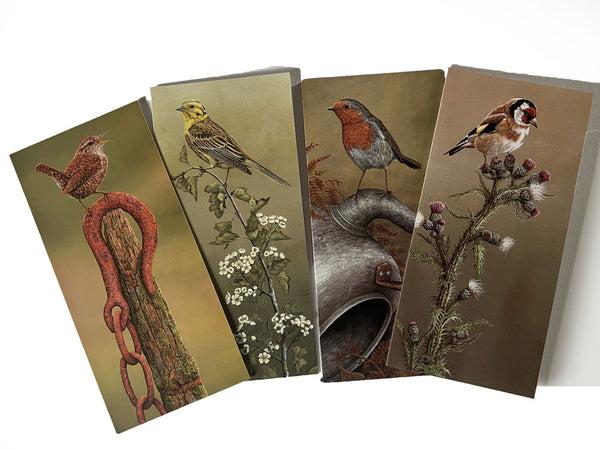
Robins are famous for choosing all kinds of unlikely locations to nest in and seem unafraid of raising their broods amidst human activity. I once used an old kettle, which I used to keep plant labels in, as a nest box. I got the idea after watching a robin perch on its handle whilst I was gardening. I decided to turn the kettle on its side and nail it to the fence and sure enough the robin took to it easily. The experience became the inspiration for one of my most popular paintings, see below. It was fascinating to then watch as the robins built the nest inside, using just their beaks to create a cup shape out of dead leaves and moss and lining it with hair.robin nesting in old kettle

Robin painted by Robert E Fuller

Robin on Teapot, by Robert E Fuller

An expensive robin nest

I am particularly fond of the second pair of robins since they wait for me to open the front door each morning and beg for fresh meal worms. This pair eventually gave up trying to nest in my landcruiser and I was pleased to see them collecting nesting material along my driveway.
robin perched on tapI was concerned I’d put them off nesting entirely. But to my surprise I watched them flying in and out of the grill of my other car! What could I do? I thought long and hard about it and decided I would simply have to ground my car for the entire nesting period - a full 38 days. They soon built a nest, stuffing the front grill with leaves and moss. It was quite amusing watching them neatly tucked away under the shelter of the car. They sat on their eggs for 17 days. It was difficult to see if any chicks had hatched as they were so tucked away inside the car. But one day they started following me around the garden, pestering me until I put more food for them. I knew this was a sign that the chicks had hatched as they needed extra food to feed their young.

Watching the chicks fledge

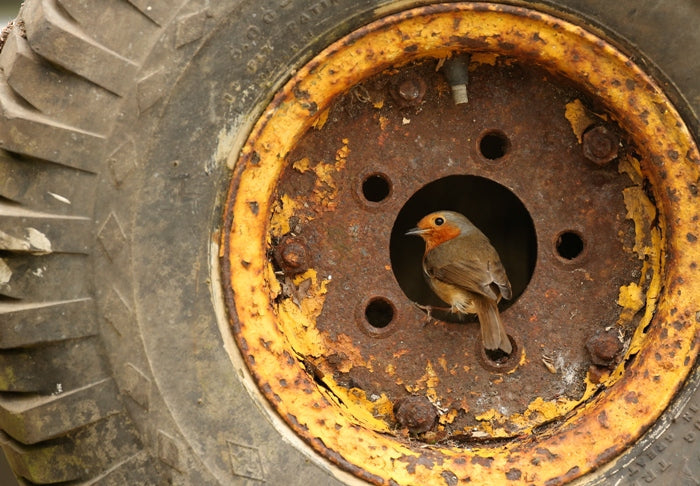
Three weeks later the chicks were nearly ready to fledge. I put up a hide in front of the car to photograph them as they went in and out of the front grill. Robins often have more than one brood, so before they chose to return to my car grill, I left an old spare tyre out for them. It turned out to be a successful box!

robin chick looking out from car tyre
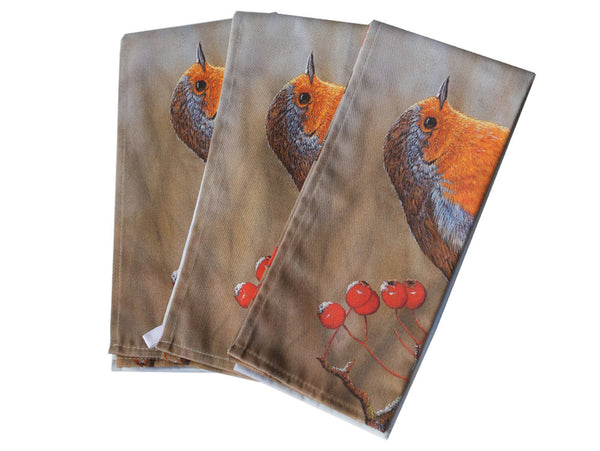
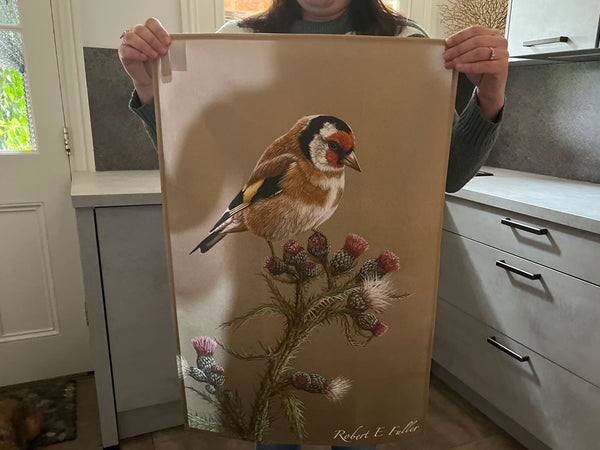
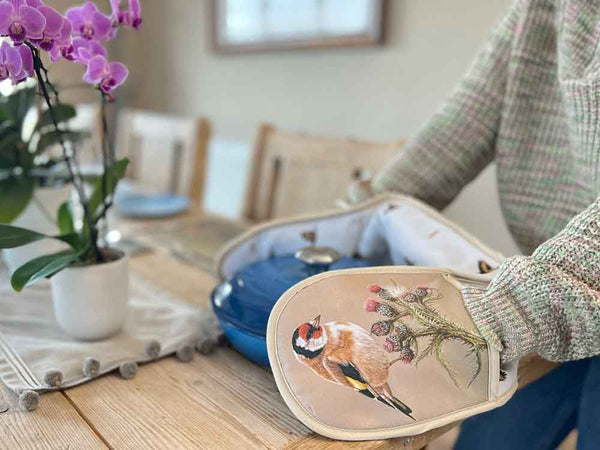
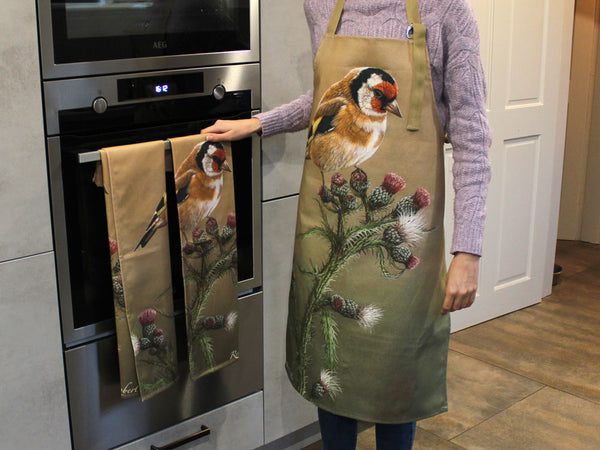
3 Robin Tea Towels
£39.00£36.00

Related Posts

Choosing a nest box for your garden birds
Time to put up a nest box It's National Nest...
How birds build bespoke nests, tailored to the needs of their chicks
Birds build the most amazing nests. Below, I pick out...
Film | Beauty of Birds in Winter | Garden Birds
Watch as a robin, blue tit, great tit and tree...
Film | The Way These Robins Help Each Other Is So Sweet  | Garden Birds
These robins have a new family to take care of...
Animal love: wildlife romance, jealousy and all the feels
Are animals romantic? As Valentine’s Day approaches I have been...
Waxwings at Christmas
Waxwings at Christmas Although they are not native birds, I...
Wildlife art inspired by mothers in nature
Art for mothers day This Mother's Day I've been focusing...
Planting a wildflower meadow for wildlife art
Planting a wildflower meadow Instead of a lawn, I planted...
How the cuckoo exploits nature's mothering instinct
Cuckoo and Reed Warbler, painting by Robert E FullerEach Mother's...
How to attract bullfinches to your garden
Bullfinches are one of Britain's most beautiful birds, but they...
Nine wild creatures to look for in winter
Winter is the best time to spot wildlife. Most animals...
Why owls hoot loudest at Halloween
Halloween hooters We have five species of owl living in...
The art of building beautiful bird boxes
A rare, living elm tree On the wooded slope of...

Leave a comment

Please note: comments must be approved before they are published.

Robins nest in an storm lantern


One spring I hung an old storm lantern over my back door and by the end of the day a robin had begun building a nest in it. I was so excited when I saw it busily carrying dead leaves and moss into the cavity, because this meant I now had three pairs of robins nesting in the garden. Robins are very territorial and pairs will not tolerate competition, unless the food supply is plentiful and there is enough cover for them. So I took this new arrival as a personal compliment for all the hard work I have put in to making my home and gallery in Thixendale a haven for wildlife. Later, it gave me an idea for a painting of swallows: storm lantern with robin nest in it

painting of swallow feeding its chicks in nest built in old storm lamp

Swallows in Storm Lamp | Limited Edition Print | Shop now

The perfect habitat for robins

Over the 17 years since I moved to Fotherdale, I have planted a small woodland, a wildflower meadow and a great number of shrubs and plants. I've also dug a pond and stream for the birds as there was no water source here then. The three pairs of robins are not altogether happy about sharing this abundance and so far one pair has commandeered the back of the garden and the other has the front, with the house acting as an invisible frontline between them. The third pair have taken over the area surrounding my gallery adjacent to my house.

Uneasy robin truce

I’m not sure how this uneasy truce will play out as the breeding season progresses, since although the new pair at the back of the house has settled into the storm lantern comfortably, the pair at the front keep trying to construct a nest in the spare wheel of my Landcruiser. I have tried to deter this pair, since I really need to use my car most days and a moving vehicle is hardly a secure environment in which to raise a new brood of robins. I’ve even tried driving it 40 m away to the car park outside my gallery, but the robins keep finding it and carrying on with their construction!robin flying past car carrying nesting material

Robin art inspiration

Robins are famous for choosing all kinds of unlikely locations to nest in and seem unafraid of raising their broods amidst human activity. I once used an old kettle, which I used to keep plant labels in, as a nest box. I got the idea after watching a robin perch on its handle whilst I was gardening. I decided to turn the kettle on its side and nail it to the fence and sure enough the robin took to it easily. The experience became the inspiration for one of my most popular paintings, see below. It was fascinating to then watch as the robins built the nest inside, using just their beaks to create a cup shape out of dead leaves and moss and lining it with hair.robin nesting in old kettle

3 Robin Tea Towels
Robert E Fuller
£39.00£36.00
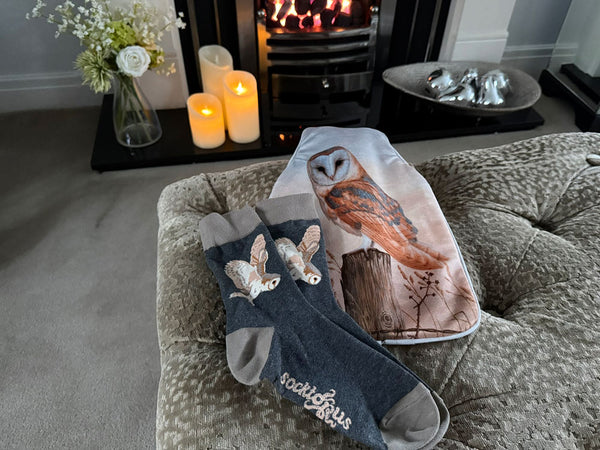
Barn Owl | Hot water bottle & sock set
Robert E Fuller
£48.00£46.00
Barn Owls in Window
Robert E Fuller
£4,550.00
Robin painted by Robert E Fuller

Robin on Teapot, by Robert E Fuller

An expensive robin nest

I am particularly fond of the second pair of robins since they wait for me to open the front door each morning and beg for fresh meal worms. This pair eventually gave up trying to nest in my landcruiser and I was pleased to see them collecting nesting material along my driveway.
robin perched on tapI was concerned I’d put them off nesting entirely. But to my surprise I watched them flying in and out of the grill of my other car! What could I do? I thought long and hard about it and decided I would simply have to ground my car for the entire nesting period - a full 38 days. They soon built a nest, stuffing the front grill with leaves and moss. It was quite amusing watching them neatly tucked away under the shelter of the car. They sat on their eggs for 17 days. It was difficult to see if any chicks had hatched as they were so tucked away inside the car. But one day they started following me around the garden, pestering me until I put more food for them. I knew this was a sign that the chicks had hatched as they needed extra food to feed their young.

Watching the chicks fledge

Three weeks later the chicks were nearly ready to fledge. I put up a hide in front of the car to photograph them as they went in and out of the front grill. Robins often have more than one brood, so before they chose to return to my car grill, I left an old spare tyre out for them. It turned out to be a successful box!

robin chick looking out from car tyre