
Bird migration in autumn
The bird migration is one of nature's most breathtaking dramas. and you don't need to travel far to see it. In fact, here in Yorkshire, you only have to look up to the sky to see huge flocks of birds on their epic autumn migration.
Spurn point spectacle
Around 17 million birds are either passing through or arriving to spend the winter. And Spurn Point, a narrow strip of land across the mouth of the Humber estuary, is one of the best spots in Britain to watch the bird migration. On a good day you can see 15,000 birds, including knot, arctic, sandwich and common terns, shearwaters and sanderlings. Meanwhile some of the birds, like swallows and house martins, are heading south.
Migrating visitors

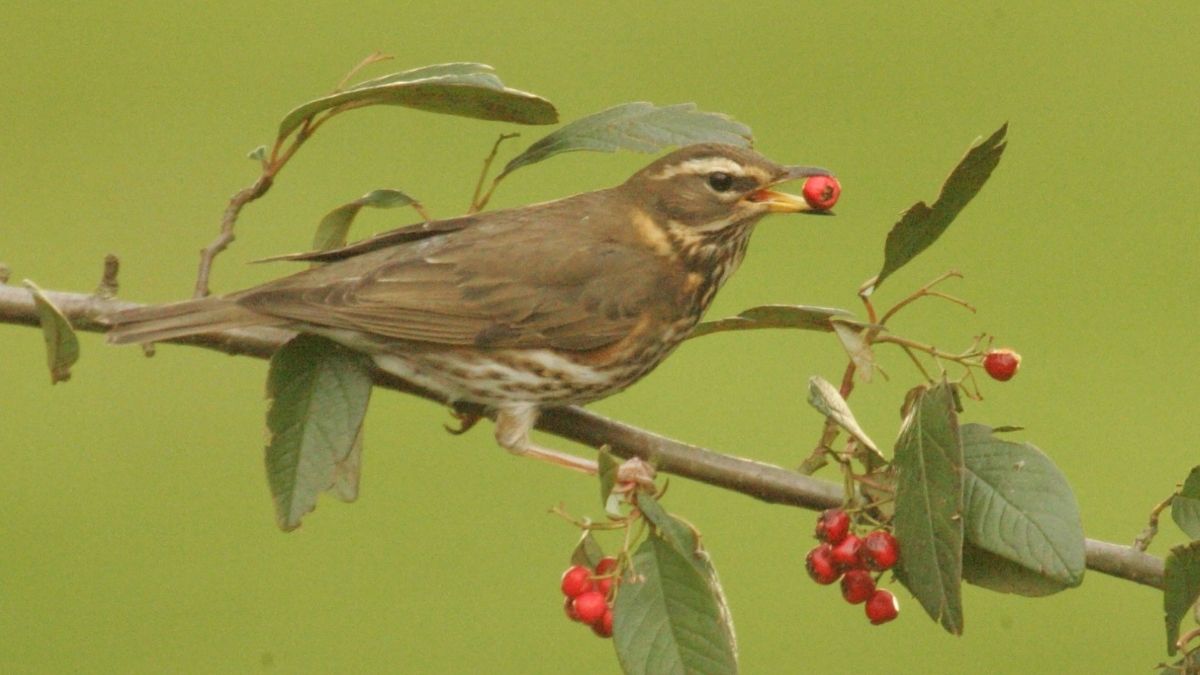
Waxwings, fieldfares, bramblings and redwings come in vast flocks to escape the icy cold of a Scandinavian winter, especially if the berry harvest has failed there.
Exhausted after long journey
The unique island shape of Spurn Point means the birds don't disperse as quickly as they would if they landed on the mainland. And in fact there is enough cover and food on this spit of land for them to stay as they recover from the long flight across the North Sea from Scandinavia.
I’ve watched redwings and fieldfares feeding on berries to build up their strength before venturing further inland. Even one of Europe’s smallest birds – the goldcrest – makes the journey across the north sea. You often spot them hiding in the dune grasses while they recover from the flight.
Feeding up before flying inland
The birds tend to be so tired when they arrive, you can get very close. I remember watching a European chaffinch land. She flew in off the sea and collapsed exhausted onto the middle of road with her wings out.
I was worried for her safety. But she didn’t flinch when I picked her up and put her onto the verge and just sat where I had laid her until she was able to fly off into a nearby bush. I even got within five feet of a bullfinch as it fed on nettle seeds. It was great to get a close look at its beautiful feathers.
Mini-migrations
Even regionally, mini migrations occur. Skylarks are resident in the UK all year round but will often leave open moorland, such as the North Yorkshire Moors and Pennines, when temperatures drop. They usually head for low-lying areas where they can be assured of less punishing weather and more food.
Meadow pipits also leave the moors in search of warmth – many travelling as far as the continent. And as the birds move on, their predators follow. Merlin usually leave their moorland habitat at this time of year to follow the food – their main diet bein meadow pipit.
Short-eared owls
Short-eared owls are also in abundance along the East Coast as they too escape the bitter northern winters to find easier prey on our shores. During my last trip to Spurn Point I watched one hunter make the most of the opportunity afforded by the influx of exhausted winter migrants.
Predators follow bird migration
A trap used by the British Trust of Ornithology to catch and ring migrating birds is marked by a wily sparrowhawk. I watched as the hawk rushed into the trap and as it did so all the birds scattered and got trapped by the wire. She then picked off a brambling and headed out again with her prize.
Bramblings are the Scandinavian equivalent of our chaffinch. I felt sorry for the brambling, which had just made it across the North Sea.
If you get the chance, don't miss this incredible autumn spectacle!


2 comments
Hello, is it a good idea to say that many birds arrive exhausted at a certain point and that you can get so close to them? This could attract easy hunters and poachers. Thanks
Hello, is it a good idea to say that many birds arrive exhausted at a certain point and that you can get so close to them? This could attract easy hunters and poachers. Thanks