Barn owl chicks grow from tiny, featherless hatchlings, into beautiful, white owls in just one month. I've studied the process over several broods using cameras hidden in their nests. Read on for what I've learned about their development.
Hatching & Early Development
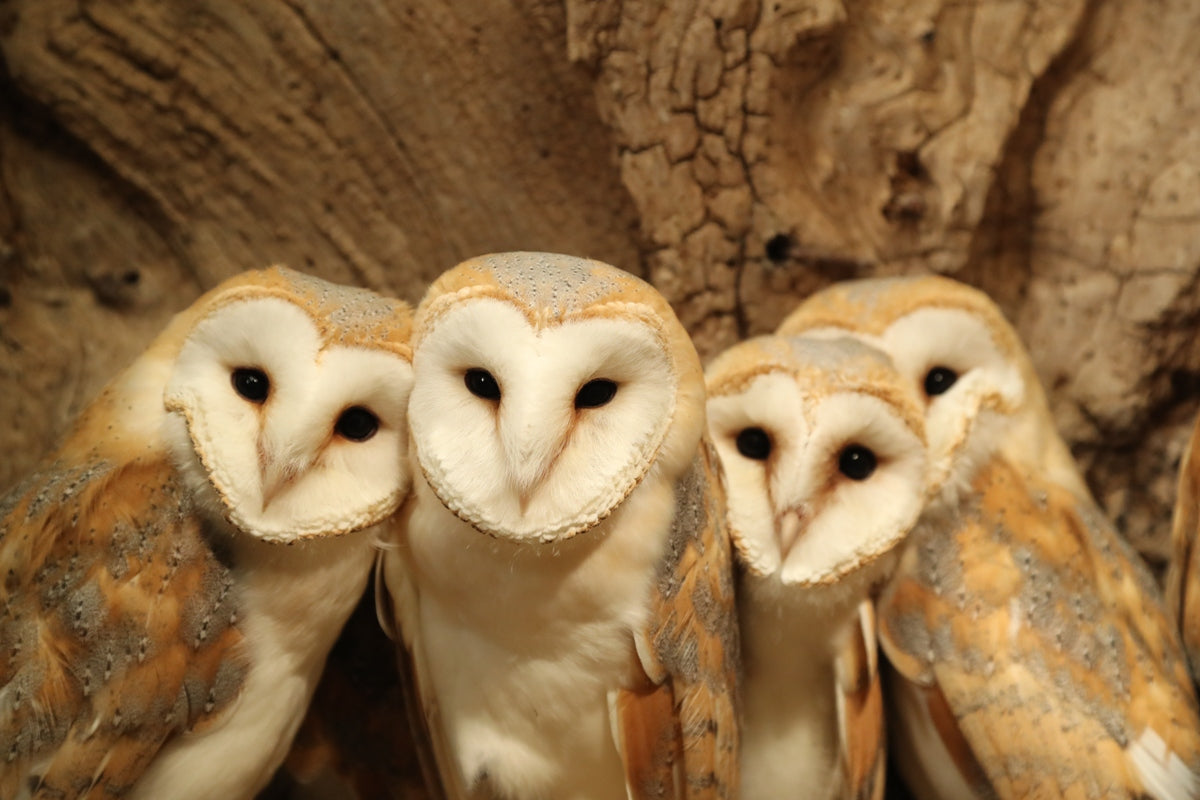
Like many ‘baby’ birds, barn owlets are naked and ugly after they first hatch. But they quickly develop a very thin covering of down and by five weeks they get their characteristic heart-shaped face. At this age they are also very playful. Like kittens, they run, jump, pounce, hiss and move their heads in the most comical manner, even turning their heads upside down.

Hatching
Each egg hatches after about 31 days incubation, so by the time the last egg hatches the eldest owlet may be three weeks old. The difference in size between chicks can be alarming. And in times of hardship, such as when food is scarce, it is not unusual for the eldest chicks to prey on the younger. It is not uncommon for nestlings to fall from the nest at this age. Sadly, this is fatal since even if the chicks are not uninjured if there are other young in the nest the parents will ignore those on the ground.
Parental Care
The male supports his family by bringing food, but it's the female's job to tear this into tiny pieces to feed to her growing young. By three weeks old, an owlet can swallow a shrew or small mouse whole. Once they can feed themselves squabbles over food become more common. At this stage, the chicks grow thicker downy feathers and can keep themselves warm for longer periods. This frees up the female to help the male with hunting duties.
Development
By five weeks old barn owl chick's flight feathers can be seen growing through their white fluffy down. Wing flapping exercises begin at about seven weeks and by eight to nine weeks old the owlets make their first short flights. 
Learning to Fly & Hunt
By nine weeks a barn owlet can fly and by 10 weeks it starts perfecting the art of landing. By 11 weeks they begin to capture their first prey.
Dispersal
After 14 weeks, an owlet that continues to spend time around its parents may be chased away. The average dispersal distance is 12km. Barn owls possess no homing instinct and dispersing young virtually never return.
Juveniles
Juvenile barn owls in dispersal are more likely to die than establish a home range. Their relative inexperience in finding and catching food means they are more likely to starve than adults. Also, the further a bird moves across the countryside the more man-made hazards it encounters. The survival rate of juveniles has more effect on the overall population-level than any other life-cycle parameter. Collisions with traffic and flying into overhead wires are among the most common causes of juvenile deaths.
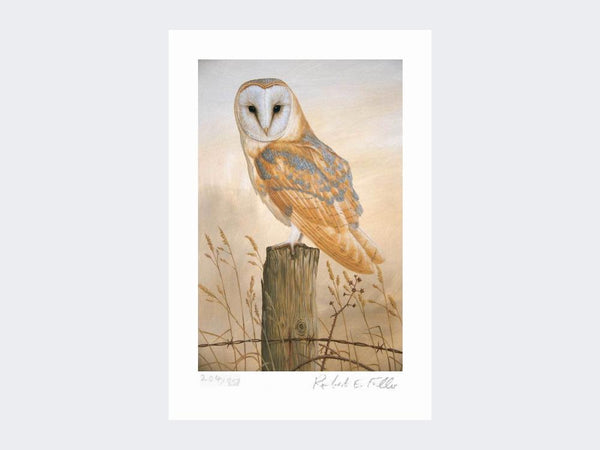
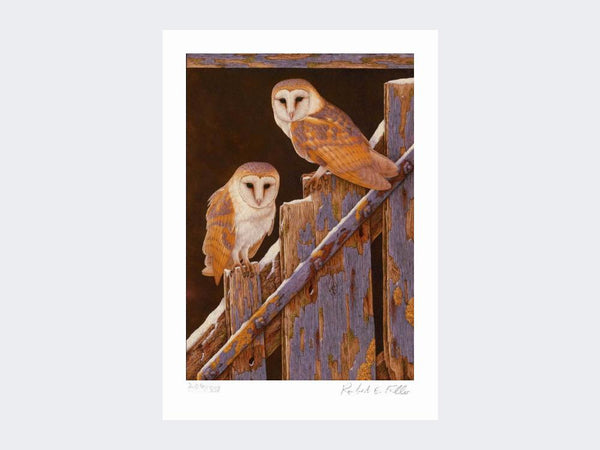
Paintings
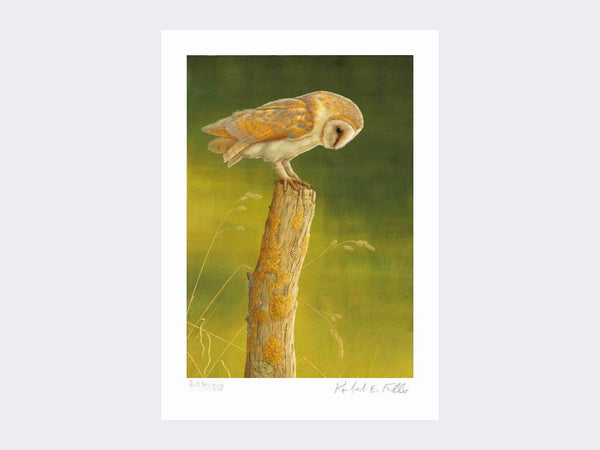
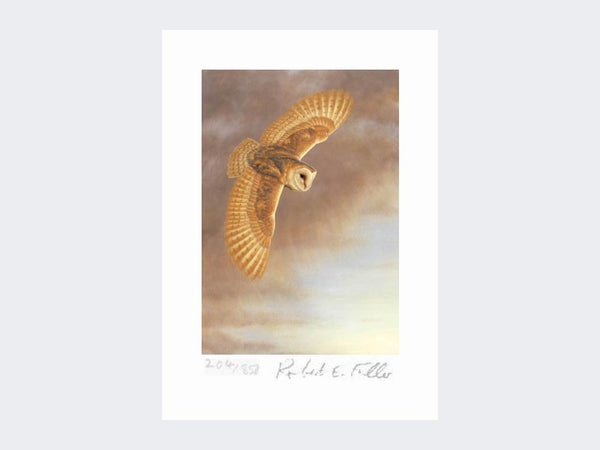
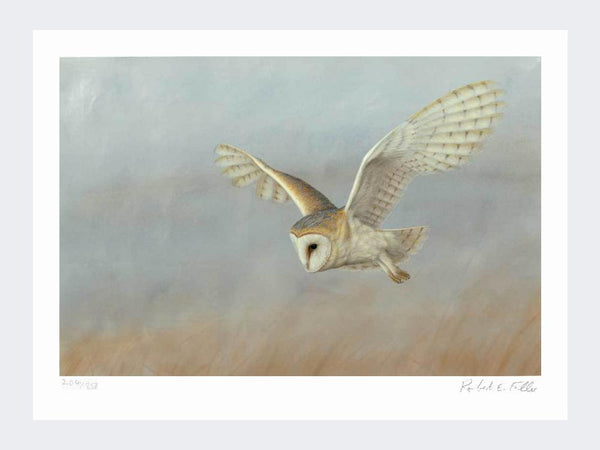
My studies have inspired many barn owl paintings, including this one featuring a barn owl in flight, the white of its underwing gleaming in the afternoon light.